Palestinians gain representation in Israel, in a last ditch attempt to survive an apartheid regime
10/31/2026 / By Lance D Johnson
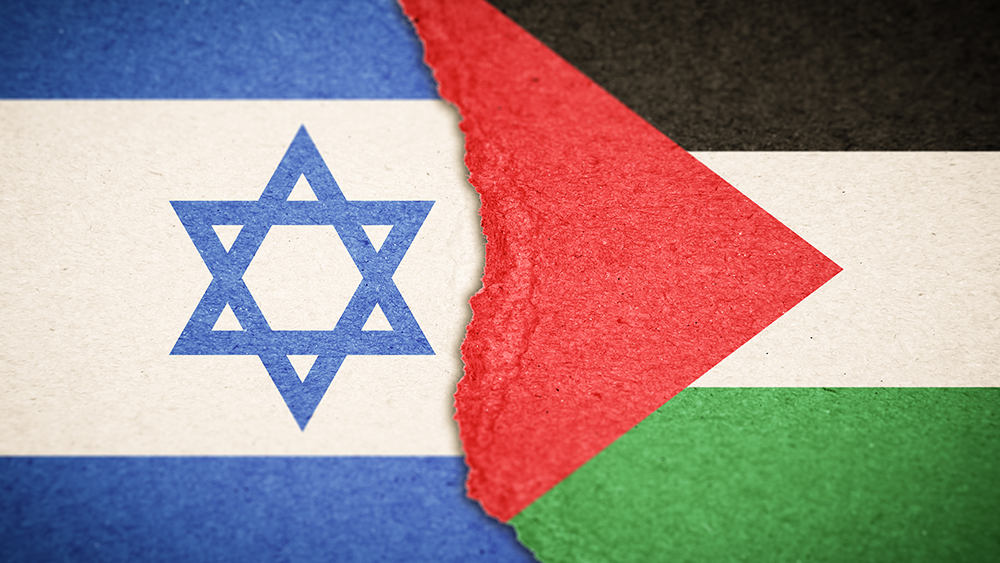
In Israel’s 2026 election, Palestinian citizens cast ballots in record numbers, not as a vote of confidence in the state, but as a desperate act of survival. The surge in turnout was fueled by a stark reality: Prime Minister Benjamin Netanyahu’s far-right coalition, armed with 50 discriminatory laws, sought to erase Palestinian political representation and cement an apartheid regime. From the establishment of illegal outposts on Majd al-Krum land to the systematic persecution of Arab communities, the message was clear: stay silent or be silenced. Yet, as one Palestinian voter in Umm al-Fahm put it, “We vote not to change the system, but to avoid being buried under it.”
Talking points:
- Palestinian voter turnout in Israel’s 2026 election was driven by existential fears of displacement and violence, not faith in the state’s “democratic” structures.
- Over 50 discriminatory laws and systemic apartheid mechanisms persist, rendering parliamentary representation a hollow gesture.
- The Netanyahu-Ben Gvir-Smotrich alliance has escalated land seizures, cultural erasure, and settler violence, pushing Palestinians to vote for survival.
- UN reports document unprecedented displacement in the West Bank and Gaza, aligning with Israel’s settler-colonial project.
- Palestinian electoral participation cannot dismantle structural racism; it is a defensive act against erasure.
The survival imperative: Voting as a defensive strategy
For Palestinians in Israel, the 2026 election was not about reform but resistance. Over 70% of Arab citizens, including lifelong boycotters, cast ballots to counter the far-right’s “ethnic cleansing” agenda. The stakes were existential: a Netanyahu-Ben Gvir-Smotrich government would accelerate land seizures, deepen cultural apartheid, and normalize the expulsion of Palestinians from their homes. The establishment of a settler outpost on Majd al-Krum land, which was orchestrated by Finance Minister Bezalel Smotrich, is really just a microcosm of this strategy, replicating the West Bank’s violent settler expansion within 1948 territories.
This defensive voting reflects a broader historical pattern. Since 1948, Palestinian citizenship in Israel has functioned as a conditional “insurance policy” against expulsion, a reality underscored by the 2026 Israel Democracy Institute survey: 55% of Netanyahu supporters opposed Arab voting rights. The UN’s 2025 report on displacement in the West Bank – documenting 36,000 Palestinians uprooted and 84 new outposts – further cemented fears. Voting, in this context, is not a celebration of democracy but a tactical maneuver to delay annihilation.
Structural constraints: Why representation fails to alter Apartheid
Despite securing 19 seats in the Knesset, Palestinian political gains cannot dismantle Israel’s apartheid framework. The state’s 50 discriminatory laws, from restricted Arabic language use to land expropriation, are entrenched in its settler-colonial DNA. Even centrist parties like Gadi Eisenkot’s bloc have ruled out coalition partnerships with Palestinian parties, illustrating that exclusion is not a fringe policy but a systemic feature.
Academic analyses reinforce this reality. As historian Leena Dallasheh notes, Palestinian participation in the Knesset is a “struggle to remain” under a regime that defines itself through Jewish supremacy. The UN’s cautious language, which describes Israel’s actions as “raising concerns” of ethnic cleansing, reflects the global reluctance to confront apartheid structures. Meanwhile, the 2026 OCHA report highlights the West Bank’s accelerating collapse, with herding families displaced for the second time in a year.
A UN human rights office report covering 1 November 2024 to 31 October 2025 said more than 36,000 Palestinians were displaced in the West Bank and 84 new outposts were established, according to Reuters and Dawn. The report said the scale and pattern of displacement appeared to indicate a concerted policy of forcible transfer and raised concerns of ethnic cleansing, while not making a definitive finding of intent. Dawn reported that at least 463 Palestinians, including 157 children, starved to death in Gaza in the period; UN Secretary-General Antonio Guterres later said more than 37,000 West Bank Palestinians were displaced in 2025.
The illusion of influence: Survival vs. subjugation
While some Palestinian voters sought to influence policy, the broader narrative of “electoral gains” masks the limitations of participation. As the Deccan Chronicle analysis explains, citizenship itself is a tool of settler control, granting individual rights while denying collective self-determination. The United Arab List’s push for integration into Israel’s governing institutions is a case in point: it risks normalizing a system built on their erasure.
The UN’s 2025 findings, which cite: “conditions in Gaza increasingly incompatible with continued existence” highlight the futility of incremental change. With over 36,000 Palestinians displaced in the West Bank and Gaza’s population teetering on the brink of starvation, the question is not whether Palestinian voters can secure more seats, but whether their survival can be guaranteed outside a system designed to extinguish them.
The 2026 election revealed a grim truth: Palestinian survival in Israel hinges on tactical defense, not political transformation. Voting, while a necessary act of defiance, cannot dismantle a state built on apartheid. As the UN, historians, and Palestinian voters themselves attest, the struggle is not for representation within the system, but for liberation from it. The path forward demands a reckoning with the settler-colonial foundations of Israel – a project that electoral participation alone cannot achieve.
Sources include:
Submit a correction >>
Tagged Under:
1948 refugees, apartheid laws, cultural erasure, displacement crisis, electoral resistance, ethnic cleansing, human rights crisis, Israeli apartheid, Jewish supremacy, land expropriation, Middle East conflict, Palestinian survival, political boycott, resistance tactics, settler colonialism, settler violence, survival strategy, UN findings, UN reports, voter turnout
This article may contain statements that reflect the opinion of the author
Get independent news alerts on natural cures, food lab tests, cannabis medicine, science, robotics, drones, privacy and more from NewsTarget.com
Get independent news alerts on natural cures, food lab tests, cannabis medicine, science, robotics, drones, privacy and more from NewsTarget.com
RECENT NEWS & ARTICLES